

 David Lee, CC BY 2.0 https://creativecommons.org/licenses/by/2.0, via Wikimedia Commons
Mitski’s upcoming album, Nothing’s About To Happen To Me, gestures toward a familiar contemporary anxiety: feeling lost while constantly connected. The lead single, “Where Is My Phone,” captures a distinctly modern sense of digital unease—searching not just for objects or notifications, but for meaning and reassurance. As the album approaches its February 27, 2026 release, Mitski once again appears poised to explore loneliness, alienation, and the quiet inner voices many of us recognize as our own.
Before the album’s release, here are ten notes—grounded in Mitski’s lyrics—that help trace the emotional and thematic landscape of her work.
1. Loneliness as a place, not a feeling

David Lee, CC BY 2.0 https://creativecommons.org/licenses/by/2.0, via Wikimedia Commons
“I was so young when I behaved twenty-five”
(First Love / Late Spring)
In Mitski’s music, loneliness is not a temporary emotion but a lived-in space. The narrator often sounds like someone who has been residing there for years. This line captures early emotional maturity as a form of quiet isolation—loneliness as a permanent address rather than a passing state.
2. Small melodies, overwhelming emotions

David Lee, CC BY 2.0 https://creativecommons.org/licenses/by/2.0, via Wikimedia Commons
“Tell me no, tell me no, tell me no”
(Your Best American Girl)
Mitski hides her most devastating moments inside restrained melodies. Repetition here signals an expectation of rejection. As the song swells, the emotional tension surfaces slowly, making the eventual impact feel intimate rather than explosive.
3. Womanhood and quiet resistance

David Lee, CC BY 2.0 https://creativecommons.org/licenses/by/2.0, via Wikimedia Commons
“I’m not gonna be what my daddy wants me to be”
(Townie)
Rather than loud rebellion, Mitski frames womanhood through endurance. Her narrators resist inherited expectations not by rejecting them outright, but by surviving under their weight.
4. Belonging as a fracture

David Lee, CC BY 2.0 https://creativecommons.org/licenses/by/2.0, via Wikimedia Commons
“Your mother wouldn’t approve of how my mother raised me”
(Your Best American Girl)
Belonging in Mitski’s work is rarely whole. Love may exist, but approval does not. Cultural distance turns intimacy into something fragile, always on the verge of collapse.
5. The Body as an Inner Monologue

David Lee, CC BY 2.0 https://creativecommons.org/licenses/by/2.0, via Wikimedia Commons
“I don’t like my mind, I don’t like being left alone in a room” — Nobody
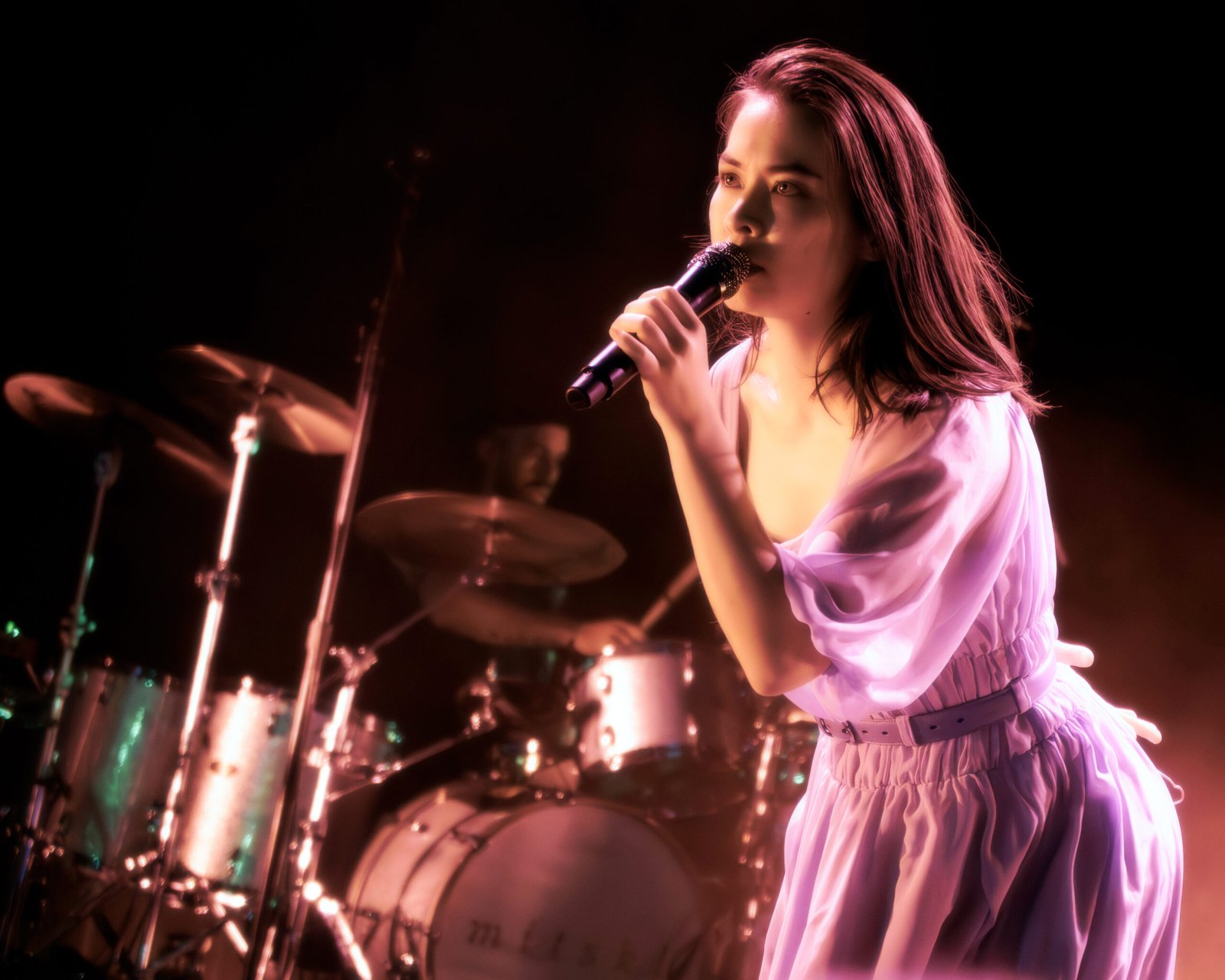
Mitski’s legendary stage presence—the choreographed movements, the intentional pauses, the averted gaze—acts as a physical extension of her lyrics. The body performs the frantic truths that the mind struggles to articulate. When she sings, she isn’t just a voice; she is a physical manifestation of an internal crisis.
6. The Primal Desire to be Seen

David Lee, CC BY 2.0 https://creativecommons.org/licenses/by/2.0, via Wikimedia Commons
“Nobody, nobody, nobody” — Nobody
Through repetition, Mitski transforms invisibility into something tangible and heavy. What is being begged for here isn’t necessarily romance—it’s recognition. It is a plea for proof of existence in a world that feels increasingly hollow.
7. Albums as Emotional Archives

David Lee, CC BY 2.0 https://creativecommons.org/licenses/by/2.0, via Wikimedia Commons
“I am the fire and I am the forest” — A Burning Hill
Each Mitski project seems to crystallize a specific emotional frequency. This line perfectly captures her recurring duality: she is simultaneously the one who lights the match and the one who is consumed by the flames. Her discography functions as an archive that listeners revisit at different stages of their own grief or growth.
8. The Power of Quiet Anger

David Lee from Redmond, WA, USA, CC BY-SA 2.0 https://creativecommons.org/licenses/by-sa/2.0, via Wikimedia Commons
“I always wanted to die clean and pretty” — Last Words of a Shooting Star
Anger in Mitski’s songs rarely manifests as a scream. Instead, it turns inward, delivered with an unsettling, glassy-eyed calm. The absence of melodrama makes these moments more disturbing—and far more relatable. It is the anger of the resigned.
Radical Honesty in the Indie Scene

David Lee from Redmond, WA, USA, CC BY 2.0 https://creativecommons.org/licenses/by/2.0, via Wikimedia Commons
“I need something bigger than the sky” — A Pearl
Even in the world of alternative music, Mitski’s writing feels unusually exposed. She bypasses irony and protective distance, stating her desires plainly and painfully. This radical honesty might alienate the casual listener, but it forges a blood-bond with those who feel just as deeply.
10. “Where Is My Phone?” — What is Truly Missing?

“I look for a picture of you to keep in my pocket” — Strawberry Blond
Clinging to memories to avoid losing one’s self has always been a cornerstone of Mitski’s art. Read alongside the new album title, this “search” feels less about a missing device and more about a missing self. The question is no longer where the phone is—it’s where we are in the midst of the noise.




No Comments